
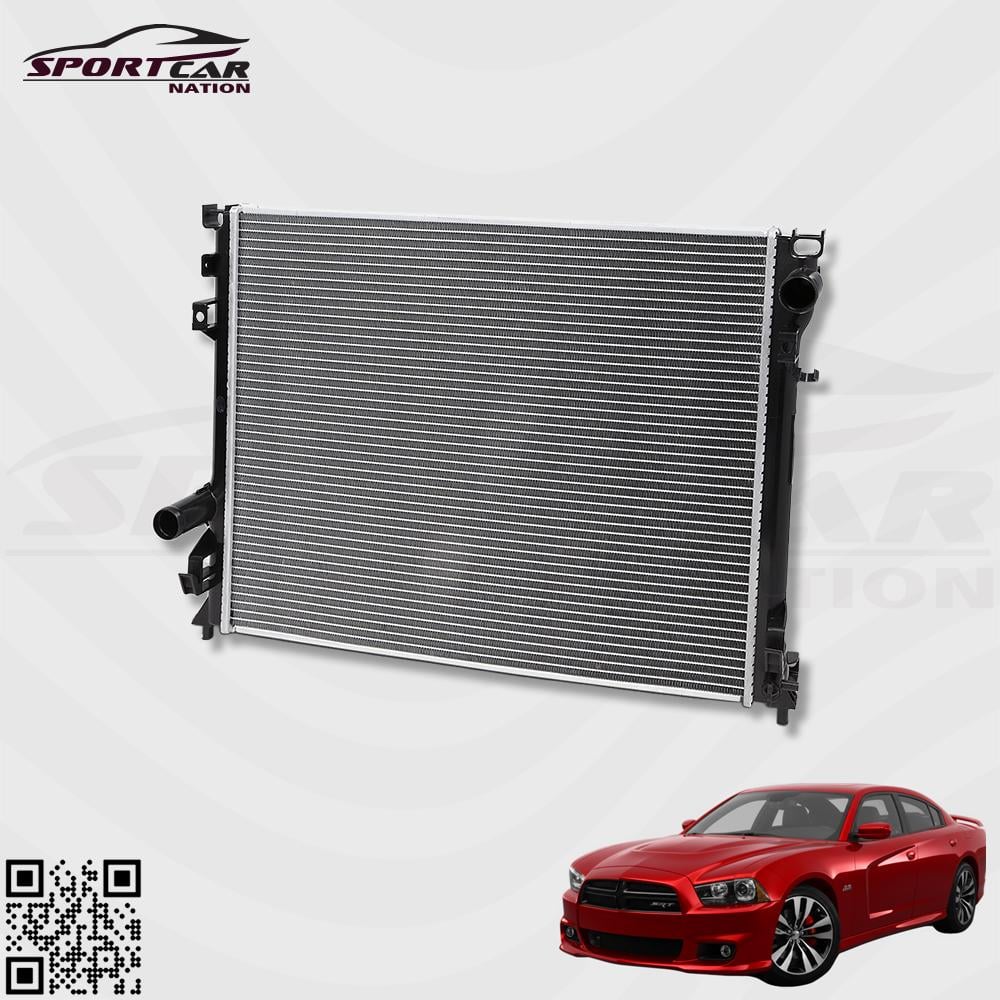


Water radiator ✅
Car: Dodge Charger ✅
Model: 2011 - 2014 ✅
Country of Origin: Taiwan✅
First class ✅
SASO Compliant✅
Matches original parts specifications ✅
*Signs of radiator damage:*
1. *Engine Overheating*: If you notice that the engine temperature gauge is rising abnormally.
2. *Water leakage*: Water spots appearing under the car or around the radiator.
3. *Unusual Noise*: Hearing strange noises from the engine may indicate problems with the cooling system.
4. *Changed color of the fluid*: If the fluid inside the radiator has changed color or has an abnormal odor.
5. *Rust accumulation*: The presence of rust or corrosion on the surface of the radiator.
*When is it recommended to change it?*
It is recommended to change the radiator when any of the above signs of damage appear, or if the radiator is more than 5-7 years old, to ensure smooth and efficient performance of your vehicle. Keep your car engine safe by choosing a reliable and up-to-date radiator.
Water radiator
*Signs of radiator damage:*
1. *Engine Overheating*: If you notice that the engine temperature gauge is rising abnormally.
2. *Water leakage*: The appearance of radiator water spots under the car or around the radiator.
3. *Unusual Noise*: Hearing strange noises from the engine may indicate problems with the cooling system.
4. *Changed color of the fluid*: If the fluid inside the radiator has changed color or has an abnormal odor.
5. *Rust accumulation*: The presence of rust or corrosion on the surface of the radiator.
*When is it recommended to change it?*
It is recommended to change the water radiator when any of the above signs of damage appear, or if the radiator is more than 5-7 years old, to ensure smooth and efficient performance of your vehicle. Keep your car engine safe by choosing a reliable and up-to-date water radiator.
How does a radiator cap work?
To understand the signs of a damaged radiator cap well, it is important to know how it works in order to ensure that the engine's efficiency is enhanced and its safety is improved. The radiator cap works as follows:
Pressure regulation
The radiator cap helps maintain a specific pressure, usually between 12 and 16 psi, which prevents the coolant from boiling. This pressure also allows more heat to be absorbed from the engine without the coolant boiling. A spring inside the cap also works to adjust and hold the pressure.
System seals
The cap ensures that the cooling system is tightly sealed, preventing coolant leakage and maintaining the efficiency of the system, so any leak in the seal could result in a drop in pressure, causing the engine to overheat.
relieve stress
When excessive pressure builds up, the radiator cap valve opens to relieve excess pressure, preventing damage to the engine or cooling components, so this valve allows excess pressure to be safely released into the overflow tank.
recirculating coolant
As the engine cools, the pressure in the system drops, causing coolant to be drawn back into the radiator. This ensures that the radiator stays full, and prevents air pockets from forming that could lead to overheating.